Stories
The Storyteller
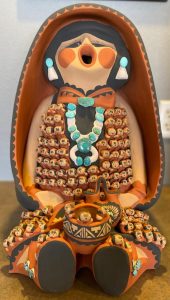
This clay storyteller figure by potter Jemez Pueblo features 112 babies with a the wedding vase in the figure’s lap. She is a reminder of both the vital importance of stories and the wide variety of different stories that are always around us. Over 50 years of AISES there have been so many stories, too many to recount here, but this section is organized around key stories with hopefully many more to come.
“There’s so many to tell and so many forgotten, but I’m sure if you talk to students over time, they’ll all have a different story, but a story that was important to them. And this is really about storytelling . . Some stories are funny. Some stories have great meanings, legends, or whatever they might be, and the storytelling doesn’t — we don’t want to live 200 years ago, but we want to remember 200 years ago, but we want to still move over in the continuum of time, and at the conferences we’ll do elders gathering of storytelling, it’s standing room only.” Norbert Hill, Jr.
A.T. "Andy" Anderson
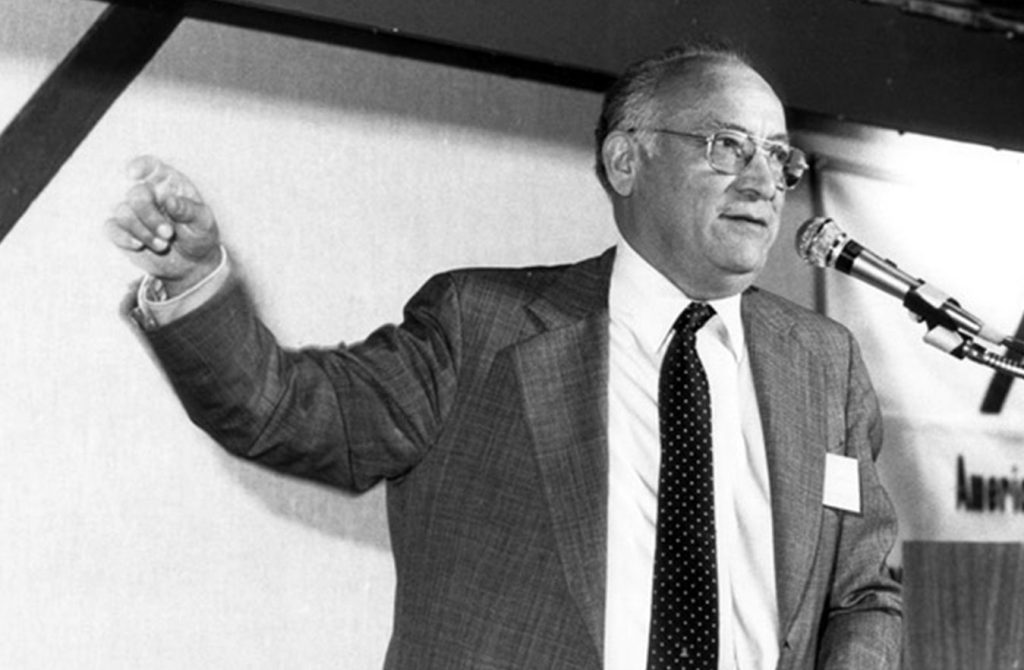
Born in Ontario, Mohawk A.T. “Andy” Anderson achieved prominence as a chemist with Union Carbide and also worked on the Manhattan Project, receiving a letter of gratitude from President Truman for his efforts. Concerned with the status of Indigenous people, Anderson worked on the American Indian Policy Review Commission for the United States government. One of the original founders of AISES and the organization’s first executive director until his death in 1983, Anderson’s contributions are honored annually with the A.T. Anderson Memorial Scholarship.
“He had a strong background. He was a very senior person, very good skills, very good communicator, very hopeful. And the idea of helping the American Indian community was certainly in his mind. He was given a job by Congress to do what is now the last report on the status of tribes in the United States, and that was a major effort that he put together. There’s a terminology: Nation Within a Nation. And there was a review of all the different aspects of native American life and the country we call Indian country. And so Andy just had a tremendous, very good background and very good communication and interactive skills. And he was a very pleasant person to work with.” – Al Qöyawayma
Jimmy "Jim" Shorty
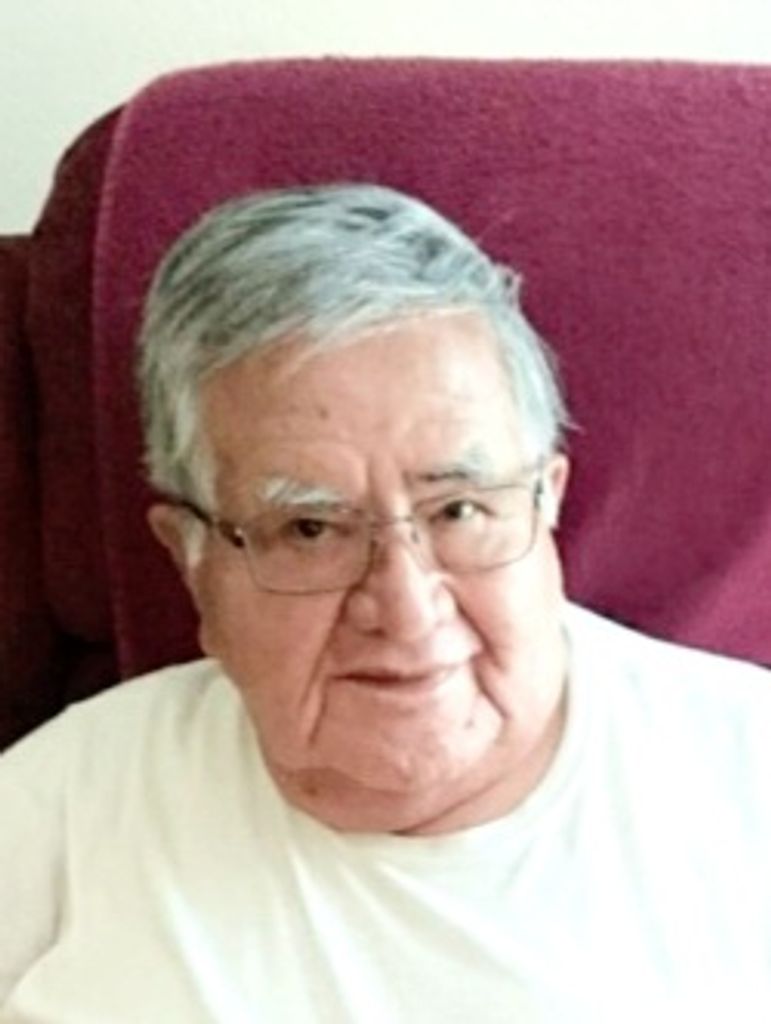
Jim Shorty, Navajo, was an AISES founding members who met together in in Petit Jean, Arkansas in 1977 to discuss forming the organization that would become AISES. His background in geology, hydrology, and law played a key role in helping to draft the initial AISES bylaws and advising on legal matters around founding AISES as a nonprofit. He later served on the AISES Board of Directors. In his career as a scientist, Shorty worked with Carol Gardipe on the University of New Mexico’s Native American Program in the School of Engineering, worked as a geologist for the Navajo Nation Department of Water Resources, and then as an educator for Sandia National Laboratories. Shorty died in 2021.
“Another individual that was very helpful was Jim Shorty. Jim had a background in geology is a little bit like Carol’s, but he also had a law degree and so when we incorporated, he was the one that took George’s initial incorporation and we formed it into AISES.” Al Qöyawayma
National and Regional Conferences

Winds of Change
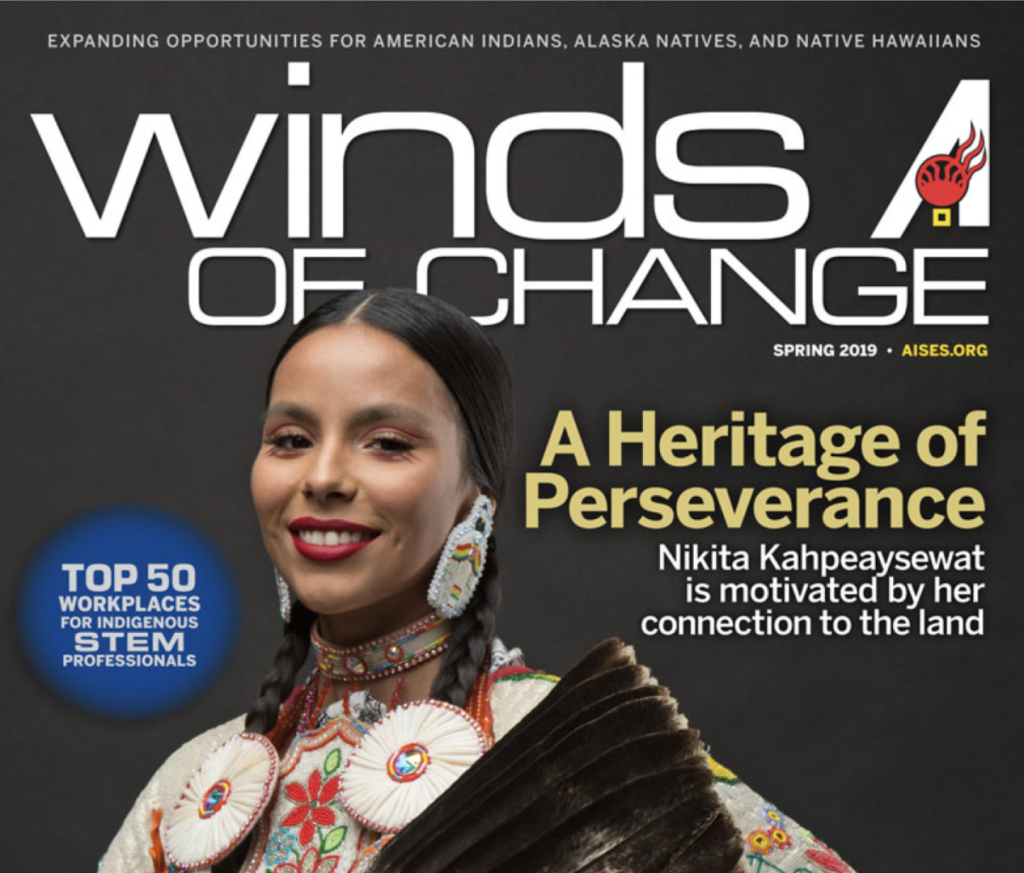
Since 1986, an important channel for AISES stories has been through magazine, Winds of Change. The magazine has communicated useful news for AISES members and educators on STEM careers and education. Issues also go out to libraries and resource centers in Indigenous communities. Each issue contains a feature article, news of the organization and its members, inspiring profiles, and listings of career opportunities
“We were going to do reprints because Indians were doing nifty things around the country and they said, “no,” we want to write. And they did. And the magazine has been going on for 40 years or more . . . We got our own stories to tell.” Norbert Hill, Jr.
Council of Elders
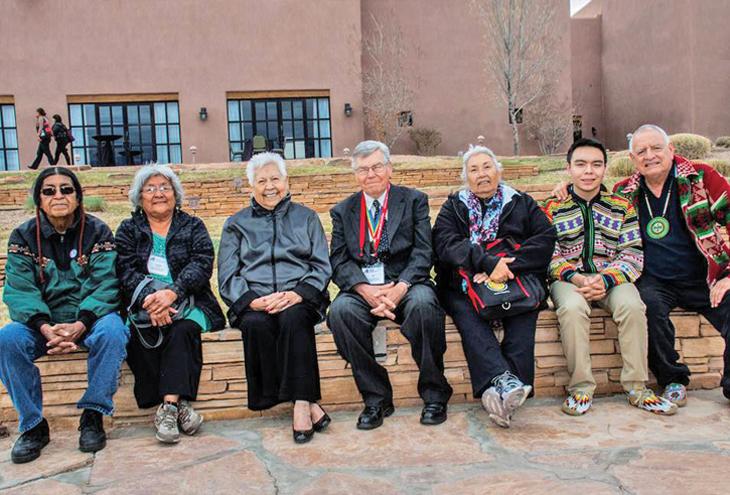
The Council of Elders plays a crucial role in the AISES mission. Elders educate members and transmit their knowledge of cultural practices. Their insights help guide the actions of the organization and build the foundation that supports the work of future generations. Elders attend AISES national and regional conferences as well as other events across the nation. They lead talking circles, safe spaces for the students and professionals to express themselves, listen, and learn. They also welcome and honor new Sequoyah Fellows, AISES lifetime members and relatives.
“As an academician, I wanted them to be all that they could possibly be in terms of the kind of careers that exist out in this world in which we, that they have mind power to be anything that they want to be. But they needed a little bit of support and a little encouragement as they walked that new road of education. And so that to me is essentially what the Council of Elders represented, a continuum of the kind of knowledge that we, as the 1st peoples of this land. continue to contribute at this day, at this time that they could be anything and everything that they wanted to be scientists, engineers, I they could. They could travel to the moon as astronaut John Harrington has done. They have that mind power. And so AISES came along to support those students who were very few initially. And of course that’s how things begin. And so there was this council of elders made up of some of the most joyful. the most knowledgeable people with whom I have ever had the opportunity to serve. People like Horace Axtell, people like Franklin Kahn, Phil Lane, Sr, Lydia, Black Elk Ice, Eddie Box, and the others that have come along to join. As time has gone on. Artley Skenandore was in that 1st group of council builders. So what do we do? We wanted our AISES students maintain contact with who they are.” Henrietta Mann
Science Fairs
The mission of AISES to support Indigenous students in STEM extends to encouraging the scientific and engineering thinking skills in younger students as well. A big part of this effort are the National American Indian Science and Engineering Fairs (NAISEF). During these events, students compete for the chance to represent NAISEF at the Regeneron International Science and Engineering Fair (ISEF) where students compete internationally against students from over 70 other countries. NAISEF competitors are also eligible for various other prizes and can use the fair to build their network at a college and career fair.
“We became a player in the international science fairs. And we started doing science fair exhibits that were culturally based. One girl did a science fair, in fact, one month recently, a girl did something on curing cancer through some indigenous ways. Another girl said I’m gonna measure the loss of culture through a social science. So every day she for a semester, she wore a different pair of moccasins. And her peers laughed at her, made fun of her for wearing moccasins. But after school she went to the old folks home or the tribal community center and the elders say what a nice pair of moccasins you have. So she was able to measure the loss of culture from her peers to the value that she got from the elders, and that was, so we gave special awards out for that, but we wanted the kids to get their hands dirty with science. . . So we had to teach the scientific methodology, the western science methodology, but also try to infuse other things with it.” Norbert Hill, Jr.

Intel Microchip Woven Rug
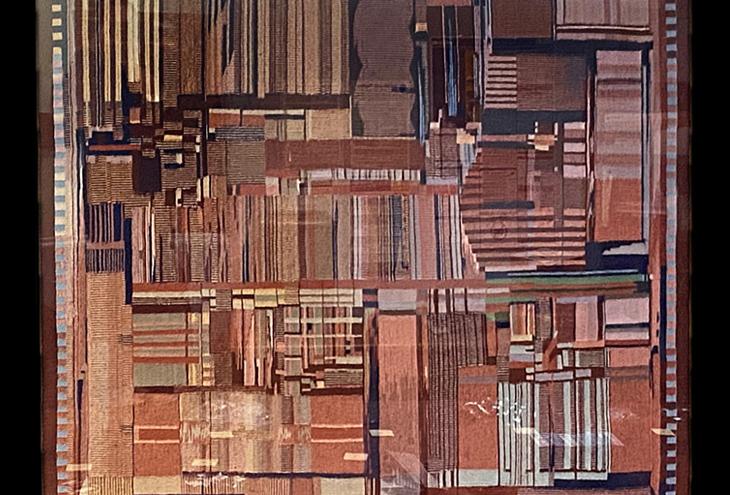
Central to AISES practice over the last fifty years has been finding continuities and connections between cultural tradition and technological innovation. A symbol of this process is the rug pictured above. The rug also represents the engagement between Intel and Indigenous communities going back to the early 1990s. Craig Barrett, Intel’s former CEO, commissioned Marilou Schultz, a Navajo weaver and math teacher in Mesa, Arizona public schools to weave an image of the Pentium microprocessor into a rug. The rug is so accurate that observers can identify that it is specifically the 1994 “P54C” revision of the original P5 Pentium from 1993. The rug is still on display at the AISES national headquarters in New Mexico. The rug represents Intel’s support of AISES which also extends to the Intel Scholarship for AISES student members studying computer science. Intel employees also volunteer their time at AISES, Intel has hosted events to support Indigenous women in STEM, and programs to teach young Indigenous students to code.
Eagle Feather in Space
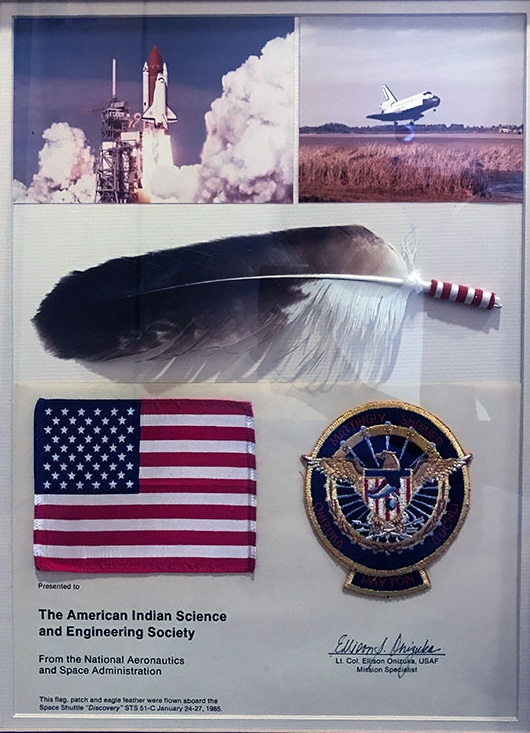
In 2002, from November 23 to December 7 Space Shuttle “Endeavour” flew a mission to exchange personnel on the International Space Station. On board the Endeavour was flight engineer Commander John Herrington (Chickasaw), the first enrolled tribal member to go to space. Harrington took with him the eagle feather pictured above which he later gifted to AISES.
“I also flew a flute and a feather. The flute was made by a Cherokee friend who was an engineer at the Kennedy Space Center. And Eagle Feather was given to me. That was beaded Mother Earth and father sky and all the people of the world. The only two items that I was actually able to take out during my mission and photograph.”
John Herrington from an interview with PBS Newshour
Sequoyah Fellowship Program
“The Sequoyah Fellowship is something that is greater than ourselves, with a spiritual dimension that is always present. The annual traditional blessing of welcome and renewal is celebrated along with the bestowing of medals to new inductees. With it, Indigenous people and allies alike share a future together, believing in ourselves and each other. This is a healthy codependency while endowing a legacy and building an ever-growing family.” -Norbert Hill Jr.
Named in memory of Sequoyah, a member of Cherokee Nation who perfected the Cherokee alphabet and syllabary in 1821, becoming a Sequoyah Fellow means being a leader in the AISES community and carrying on the legacy of cultural knowledge, individual achievement, and Indigenous unity for generations to come.

Sloan Foundation and SIGP Program
Throughout its fifty year history AISES has formed productive partnerships with a wide variety of individuals and organizations to include government agencies, corporations, and nonprofits. One particularly special nonprofit relationship has been with the A. P. Sloan Foundation. In 2003, the foundation’s support created the Sloan Indigenous Graduate Partnership (SIGP), a scholarship program for Indigenous graduate students pursuing advanced degrees in STEM. One of the many scholars whose studies have been funded by SIGP is Shanara Lynn Spang Gion who is a Visiting Tribal Scholar in the College of Natural Resources at the University of Idaho where she researched critical and Indigenous water geographies.
“I also flew a flute and a feather. The flute was made by a Cherokee friend who was an engineer at the Kennedy Space Center. And Eagle Feather was given to me. That was beaded Mother Earth and father sky and all the people of the world. The only two items that I was actually able to take out during my mission and photograph.”
John Herrington from an interview with PBS Newshour